

Author Interview: Featuring India Johnson
Our first Published Author & Illustrator on the Key of E!!


Today’s newsletter features India Johnson, a teenage author hailing from beautiful Colorado. She’s the author of the middle-grade Freedom Through Fire Saga and illustrator for the bestselling National Park Mystery Series. She’s also a recipient of a Scholastic Gold Key and a Silver Key award. She loves writing middle-grade and YA novels that walk the line between fantasy, dystopia, and realism. Besides writing and illustrating, she also loves touring the national parks, drinking boba tea, snuggling with her cat, and chatting with her long-distance friends.
ME: Hello India! It’s wonderful to have you here on the Key of E. To kick off this interview, let’s start with a few ‘get-to-know-you’ questions. What are your favorite writing snacks/drinks?
INDIA: Hi! It's wonderful to be here. Currently, my favorite writing drinks are sweet tea and Pepsi Colas (though, on the rare occasions I have access to boba tea, it wins for my overall favorite). As for my favorite snacks, I always try to have something chocolatey on hand - whether that be Chocolove bars, monster cookies, or one of my sister's delicious desserts.
ME: Chocolate and tea — of all various kinds — seems to be the go-to for most authors! (And a wise choice, if I may say so…) Snacks aside, is there a time of day you prefer to write during?
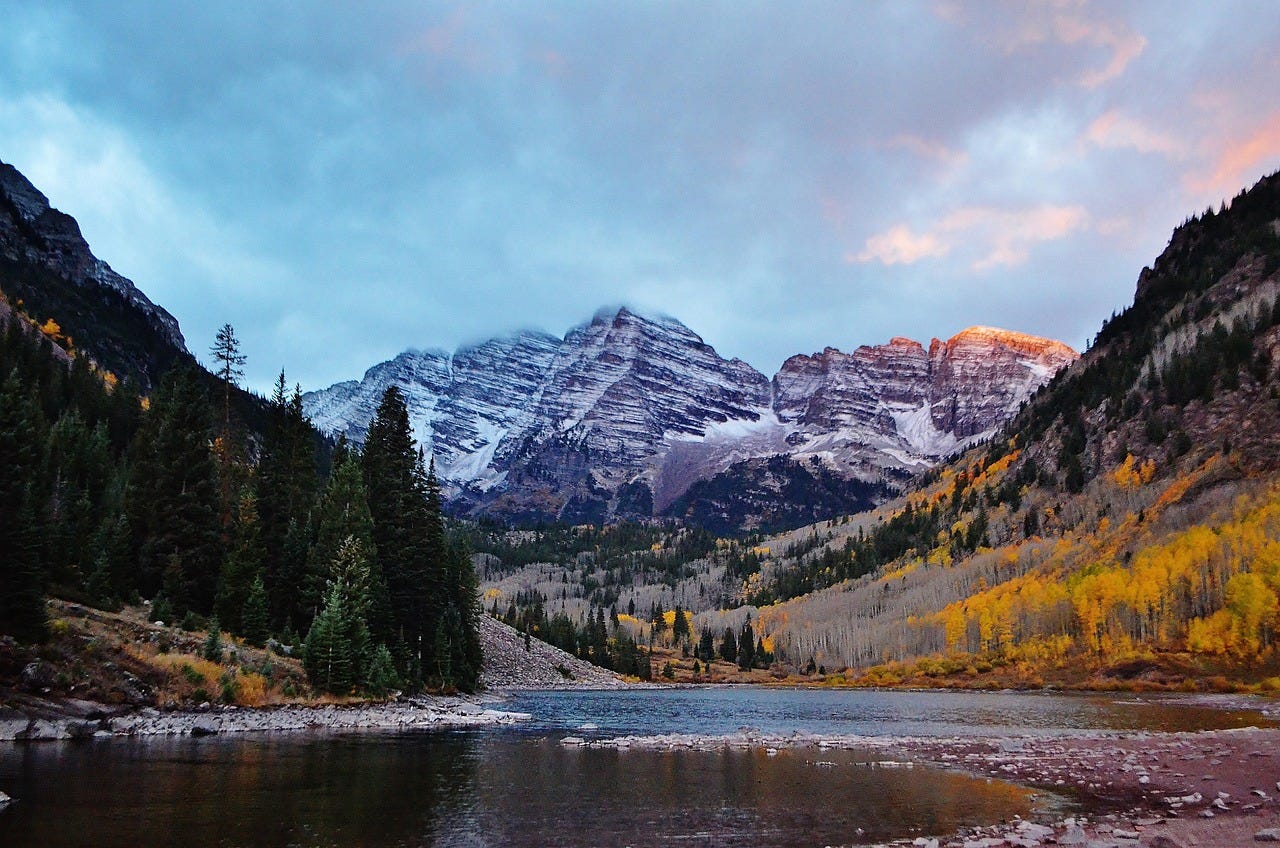
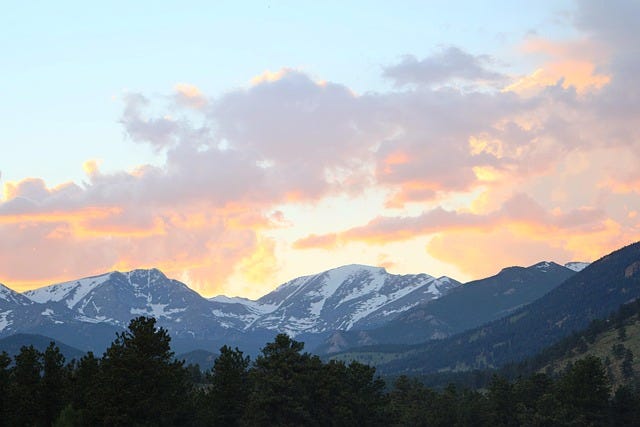
INDIA: I prefer to write during the afternoon and early evening—my favorite time is when the house fills with golden light, right before sunset.
ME: That's one of my favorite times of day, indeed. And I've heard the sunsets in Colorado are gorgeous! Has living in the west influenced your writing or art at all?
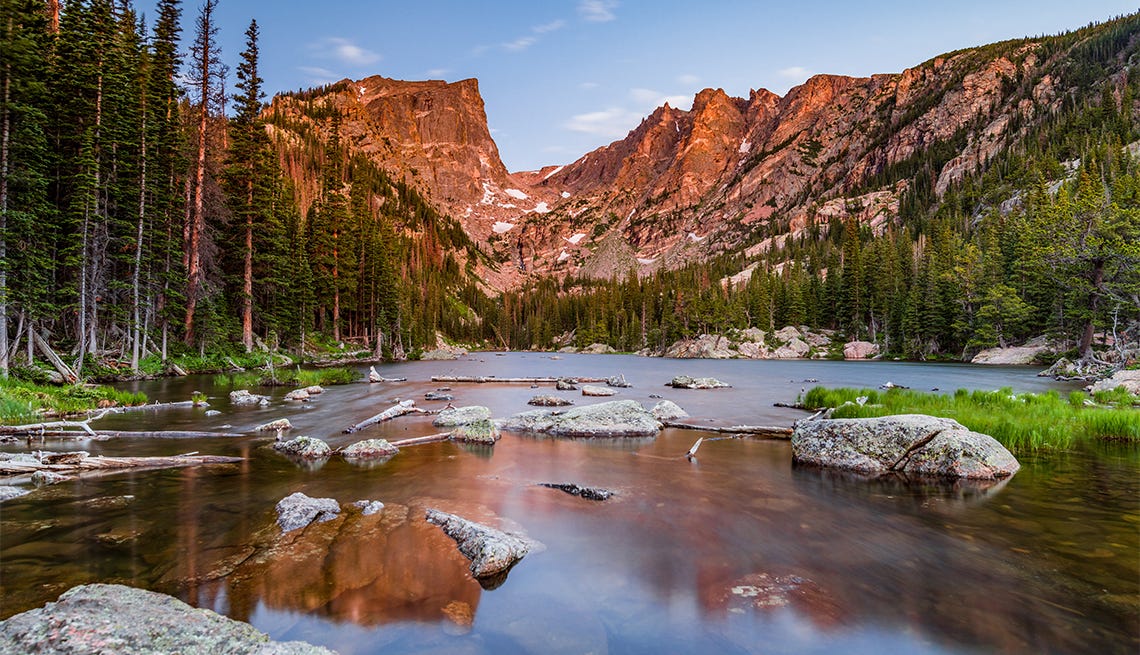
INDIA: Yes, they really are stunning! Living in Colorado has influenced just about everything I've written. I love writing books set in places I've been to—from cities to zoos, malls, and wilderness areas—which is why a large portion of the Freedom Through Fire Saga takes place in Colorado. I've always been very inspired by nature, and large portions of my books are based on my experiences exploring the wilder parts of the state. (In fact, my short story in the upcoming S.E. Collaborative Guild of Authors and Artists anthology is especially Colorado inspired.) Living in the west has influenced my art as well, mainly because the landscape is similar to many of my illustrations for the National Park Mystery Series.
ME: That’s wonderful! I love reading stories that are influenced or inspired by real-life places. Speaking Freedom Through Fire (FtF), let’s talk a bit about your writing and publishing process with those books. On Amazon, the publisher info simply says “Independently Published.” Do you mind expounding on that a bit more?
INDIA: I'm a self-published author! Instead of relying on a traditional publisher, I manage everything myself—including editing, beta teams, cover design, hiring illustrators, marketing, and distribution. This gives me greater control of my rights, my royalties, and how I tell my stories. I currently publish through KDP (Kindle Direct Publishing).
ME: Wow, that sounds like a lot of work! What are some pros and cons of self-publishing that you’ve noticed over the years?
INDIA: To start with the main con: You have to do everything yourself. Which, though it doesn't have to be a con, does take grit. The main issues I've watched self-published authors face are marketing and commissioning illustrators for covers. They often lack the capital and knowledge to do either—or, afraid of losing money, they simply avoid doing either. Another con is that public recognition opportunities are more limited as a self-published author. For example, even if you're a best selling author, your book likely won't end up on the New York Times Bestseller list. Or on that center table in Barnes and Noble. Or on the Battle of the Books list at the local library. That's for two reasons: One, traditional publishers tend to get more attention from high-end sellers (though I hope that changes in the coming years). Two, it's much more difficult for self-published authors to meet the criteria for any of the above, even if they are selling well.
As for the pros of self-publishing, I could go on forever (or close to it). To name some of my favorite pros: As I mentioned, I get a much higher royalty than traditionally published authors. I also get to decide how to price my book, how my book is formatted, when I publish, what my cover looks like, and, most importantly—how I tell my story. Traditional publishers have the same model: shove hundreds of books into the world, and the one that succeeds will pay for the ninety-nine that fail. Because of this, traditional publishers can't afford to care for every author and every book. So, they usually edit according to an unspoken formula and without open minds. With self-publishing, I get to control my characters, my plot, what stays in my book, what gets cut, and ultimately, my voice.
ME: Wonderfully said, India, thank you so much. I take it you’ve been in the “self-publishing biz” for quite awhile?
INDIA: Yes, I have! I've been self-publishing for nearly five years now.
ME: From your author website, it looks like your main work is the Freedom Through Fire Saga. Would you mind giving a short summary of what those books are about and why you’re writing them?
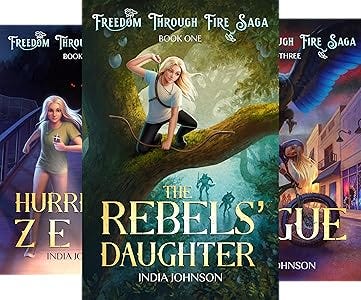
INDIA: The Freedom Through Fire Saga is an upper middle-grade fantasy and dystopia series. It follows the life of Skylar Rusten, a teenager who has grown up on a dystopian island, battling the ruthless wolf-like relknish and bird-like crickcrawks. But everything she was told about her world is a lie. Suddenly, the war becomes much bigger than she imagined, and she and her friends are the only ones who can end it. But the relknish leader, Fang, is determined to dominate humanity—and destroy the Rusten bloodline, once and for all. The first three books are out, and, if everything goes according to plan, the rest of the series should be released over the next year!
As for why I'm writing it? That's a tough question because I could answer a dozen ways. To name the main ones: When I wrote the majority of the books, I was struggling with severe OCD ruminations (Obsessive-Compulsive Disorder), depression, and POTS (Postural Tachycardia Syndrome). Writing FTF allowed me to create a safe environment for myself while the real world wasn't safe. It's been years since then, and thanks to my family's support, I'm doing much better both mentally and physically! Now that I'm older, my reasons for writing the series have changed. Currently, I'd say that I'm writing FTF as a tribute to my younger self. I want to provide tweens and teens with the book series I wish I had growing up and while I was struggling.
ME: I’m glad to hear you’re doing better — and what a wonderful reason to keep writing. Having read your books, I’m quite excited for the rest to come out! So what does your writing process look like? Are you an outliner or more of a ‘story as we go’ sort of planner?
INDIA: For the Freedom Through Fire Saga, my writing process has been a bit unusual. I wrote the entire series (except for the first book) when I was thirteen, over the course of six months. I've always been a plotter, so I started off by compiling all my notes into chapter-by-chapter timelines and then speed-writing the first drafts. After I finished the rough drafts, I turned to editing. I start with developmental editing and rework the plot and writing chapter by chapter. Then, I send it to my beta team—and while they're giving feedback, I begin working on developmental edits for the next book. Once the beta feedback comes, I implement my readers' feedback and start on final line edits. It's practically leap-frog at this point—I'm always reworking a book, implementing beta edits into another, and line-editing!
ME: That’s a great way to always be productive, even in the harder writing times.
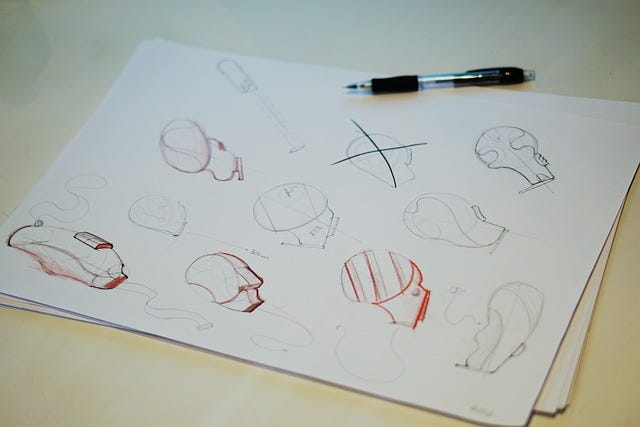
ME: Moving into other creative areas, you mentioned earlier that you are also an illustrator. What kind of art style do you use?
INDIA: It depends on what I'm illustrating for! Overall, my work falls into cartoon or semi-realism styles.
ME: How long have you been practicing art, and how do you hope to incorporate it into your future as an author?
INDIA: I've always enjoyed art, but it wasn't until recently that I began to practice seriously. I'd love to be a part-time freelance illustrator and work with other authors to capture their stories. And my own—since I was little, I've loved book series that have lots of artwork, and I'd love to give my readers the same experience! My dream is to write and illustrate graphic novels for teens someday.
ME: That’s so wonderful! What are your favorite and least favorite parts of illustrating?
INDIA: Oh, that's a hard one! It depends on whether you mean the illustrating process or technical skill. My favorite part of the process is bringing life to a scene that we couldn't necessarily experience otherwise, and my favorite technical part is illustrating characters! My least favorite part of the process is that I can rarely do justice to the image in my head, and my least favorite technical skill is perspective.
ME: Ah yes, perspective is quite tricky. Your illustrations in the National Park coloring book are lovely! Alright, just a few more questions and we’ll wrap this interview up. What are your top three favorite authors and why do you like them?
INDIA: 1. J.K. Rowling. I love the complexity of her plots. 2. Andrew Peterson. I love his world-building and wholesome characters. 3. There are a lot of people who could make it into this spot, but I think I'd say Gary D. Schmidt. I love the way he deals with hard topics, and the way he uses themes and the unseen hand in his plots.
ME: Cool! And who are your top three favorite artists?
INDIA: Laura Hollingsworth, Prince Canary, and Charlie Bowater!
ME: Alright, our final question for today! Do you have any advice for younger writers who aspire to be published one day?
INDIA: Write because you love it and write what you love. Don't put pressure on yourself to be perfect. Instead, just try to tell your story to the best of your ability. Be brave enough to finish something. And when it comes time to publish, publish because you love the story you told.
ME: Amen! Thank you so much, India, for taking the time to do this interview. You gave some really wonderful answers, and it was amazing to get to know you better! I’m glad there are authors like you who put good, well-written stories out into the world.
INDIA: Of course! Thank you for having me!
Huge amounts of gratitude to India Johnson for coming on the Key of E today! You can find her author website here.
Take a look at her:
 | A guest post by
|
What a wonderful interview, India and Lissie! It’s so cool to have a peek into the world of self-publishing and your particular inspirations. 💞
Such a great interview! I loved hearing both of your thoughts.
I will say I rather disagree with India's view of traditional publishing. I know of dozens of teens and young adults from the Young Writer's Workshop// Author Conservatory who were able to publish traditionally and still make enough money to support themselves, all while sharing the story that God put on their hearts.
All that said, self-publishing is a great option too! They both have their pros and cons. :)